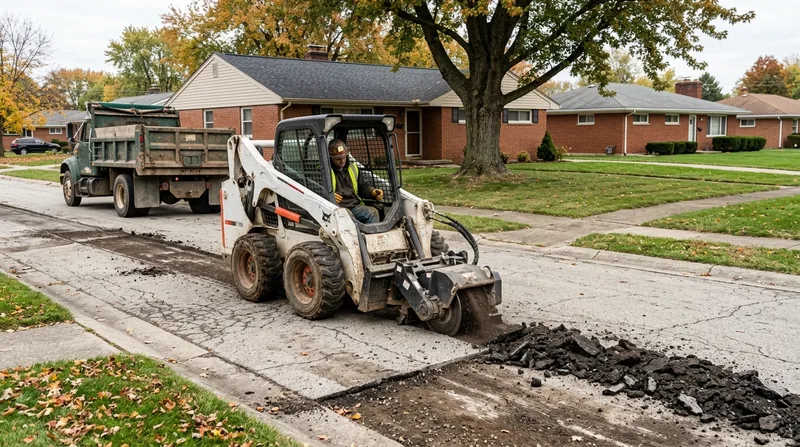




Asphalt Milling & Removal in Dayton is the heavy-equipment answer to driveways and parking lots that have outlived their surface life or sit too high at the garage apron. Dayton's freeze-thaw cycle, heavy glacial clay base, and forty inches of annual rain push asphalt surfaces hard, and by year fifteen to twenty, most driveways in post-war Kettering, Huber Heights, and Riverside neighborhoods show the strain: alligator cracking, rutting, and edge failure that no patch can fix. Milling removes the old surface layer and recovers grade, so a new overlay sits flush with your garage door and apron instead of climbing them. Full-depth removal hauls away everything and rebuilds from the subgrade up, a choice that makes sense when the base has failed or when you need to reset drainage. We mill and remove asphalt the way it should be done: with written tonnage specs, proper equipment, and honest guidance on whether your driveway needs milling or just resurfacing.
Why Milling Matters in Dayton: Grade, Drainage, and the Garage Door Problem
In Dayton and the Miami Valley, the single most common reason to mill instead of overlay is the garage apron creep. When you resurface an existing driveway without removing the old layer, you add thickness. Over time, that thickness builds up until your apron is higher than your garage threshold, water pools against the door, and the driveway becomes a liability instead of a surface. Milling removes two to three inches of the old asphalt, recovers the original grade, and lets you install new surface at the right elevation. The glacial clay and limestone base that underlies Oakwood's stone mansions and Beavercreek's ranch subdivisions also demands attention to drainage: if the subgrade is holding water or if the old base has deteriorated, milling exposes the problem and lets us rebuild it right.
- We recover grade at garage doors and aprons so new asphalt sits flush and water sheds correctly.
- We expose the subgrade and base, revealing whether they are sound or need replacement.
- We recycle the milled asphalt: it can rebuild your base layer, surface a farm lane, or avoid the landfill entirely.
- We deliver written tonnage specifications so you know exactly what was removed and what goes back down.
Milling is the professional answer when the surface is gone but the base still has life, or when grade correction is the real problem underneath.
Key info: A typical Dayton driveway milled to remove alligator cracking and reset an apron yields 40 to 80 tons of reclaimed asphalt, depending on width and length. That tonnage can be reused as base material under new asphalt, saving haul-away costs and material expenses. We provide a written estimate with tonnage on every milling job.
For details on permits and how milling fits into a broader resurfacing or replacement project, see our asphalt resurfacing and overlay page.
How We Mill and Remove Asphalt in Dayton: Equipment, Process, and Reclamation
Milling is not demolition: it is precision removal of asphalt layers using a milling machine that grinds the surface into uniform chips while leaving the base intact. We stage the job carefully, mark utilities through Ohio 811 before we touch the ground, and coordinate with your schedule. Full-depth removal is heavier work, involving excavation of all asphalt and base material, haul-away, and subgrade preparation for a complete rebuild. Both methods require heavy equipment access, clear sight lines, and advance planning, especially in tight neighborhoods like the Oregon District or on narrow lots in Dayton View.
- We call Ohio 811 and mark all utilities before any equipment moves onto the property.
- We set up the milling machine to remove the specified depth and collect chips for sorting and reuse.
- We proof-roll the exposed base to confirm it is stable, or flag areas that need subgrade work.
- We haul away all milled material or deliver it to your site for base rebuild if you choose reclamation.
- We prepare the surface for new asphalt installation, setting grade and drainage for proper water shedding.
The result is a clean, properly graded surface ready for overlay, and a detailed record of what was removed and where it went.
Local example: A 2,500-square-foot driveway in Centerville with severe alligator cracking and a two-inch apron rise typically yields 50 to 60 tons of reclaimed asphalt. We mill that surface, recover the grade, and use the reclaimed material as base under three inches of new asphalt. The homeowner saves on haul-away and material, and the finished drive sits level with the garage door.
Learn more about the next step after milling by visiting our driveway replacement page.
Milling Methods: Reclamation, Full-Depth Removal, and When to Use Each
| Approach | Description | Best for |
|---|---|---|
| Mill and Reclaim | Remove top 2 to 3 inches of asphalt, collect chips, and reuse as base material under new surface. | Grade recovery, apron reset, sound subgrade, cost savings on haul and material. |
| Mill and Haul | Remove 2 to 3 inches of asphalt and haul all material off-site for recycling or disposal. | Tight sites, contaminated asphalt, no room for chip stockpile, customer preference. |
| Full-Depth Excavation | Remove all asphalt and deteriorated base, haul away, expose and prepare subgrade for complete rebuild. | Failed base, poor drainage, contamination, new grade or slope, sites needing culvert or apron work. |
| Selective Removal | Mill or remove asphalt only in areas of failure (potholes, alligator cracking) and leave sound sections intact. | Partial surface failure, budget constraints, preserving good base, phased replacement over time. |
Asphalt Milling & Removal Cost in Dayton: What to Expect
Milling and removal pricing in Dayton runs from $1,500 for a small residential driveway mill and haul, up to $8,000 to $15,000 for a full-depth removal and rebuild on a large lot or parking area. The main factors that move the cost are the total square footage, the depth and condition of material being removed, whether you reclaim the chips or haul them away, site access and slope, and the complexity of the subgrade. A tight driveway in a historic neighborhood like St. Anne's Hill costs more per square foot than a wide suburban drive in Huber Heights because equipment access is harder and setup time is longer. If the subgrade is wet, soft, or requires grading and compaction, the cost climbs. We provide written estimates with tonnage and method specified, and we encourage you to get two or three quotes so you can compare not just price but approach and transparency.
See our full pricing page for detailed breakdowns by service and for a sense of how milling fits into the cost of a complete mill-and-pave project.
What to Look for When Hiring an Asphalt Paving Contractor Near Me in Dayton
The paving trade in Ohio is not state-licensed, but registration and permits are managed by your city or village, and those rules vary. The City of Dayton, the village of Kettering, Beavercreek, and other municipalities in Greater Dayton each set their own contractor registration requirements and may require a bond. Before you hire, confirm that your contractor is registered with your local building department and carries liability insurance. Ask for a written estimate that spells out the method (mill only, mill and haul, full-depth removal), the tonnage or volume being removed, the equipment being used, and the timeline. Check references from recent jobs in your area, especially if you are in a historic district or an HOA community where architectural standards or covenants might apply. Ask whether permits are required in your jurisdiction and whether the contractor will help you navigate them. Be wary of any estimate that lacks tonnage specs, any contractor who shows up unsolicited at your door, or any price that seems too good to be true.
- Verify that the contractor is insured and registered with your city or village building department.
- Request a written estimate with method, tonnage, equipment, and timeline clearly stated.
- Ask for references from recent milling or removal jobs in Dayton, Kettering, Centerville, or your neighborhood.
- Confirm whether your driveway or lot requires a permit and whether the contractor helps with the permit process.
- Check whether any HOA or architectural covenants apply to your property and how the work will comply.
- Call Ohio 811 or ask the contractor to confirm they will call before any excavation or milling begins.
A local contractor with local plates, a local address, and a track record in your area is always the safer choice than a traveling crew.
Ready to move forward? Contact us for a free estimate and a detailed walk-through of your milling or removal needs. Call (937) 930-3543 or fill out our online form, and we will respond within 24 hours.
Asphalt Milling & Removal in Dayton: Pricing Guide
| Service | Price | Details |
|---|---|---|
| Residential driveway mill and haul | Starting at $1,500 | 2 to 3 inches removed, asphalt hauled away, grade recovered, site cleaned. Cost varies by square footage and access difficulty. |
| Mill and reclaim (base reuse) | Starting at $2,000 | Remove and chip asphalt, stockpile on-site for reuse as base under new surface. Saves haul and material costs on overlay or replacement. |
| Full-depth excavation and haul | Starting at $3,500 | Remove all asphalt and base, expose subgrade, haul all material away. Cost depends on depth, square footage, and site access for equipment. |
| Parking lot or large-area milling | On estimate | Commercial or multi-space lots require on-site measurement and assessment of base condition, drainage, and material volume before pricing. |
| Travel and site visit | Included | No extra charge for travel within Dayton and surrounding service areas. Estimate is free and carries no obligation to hire. |
Indicative pricing, the exact cost depends on square footage, finish, and site access. Free personalized estimate within 24h at (937) 930-3543.


