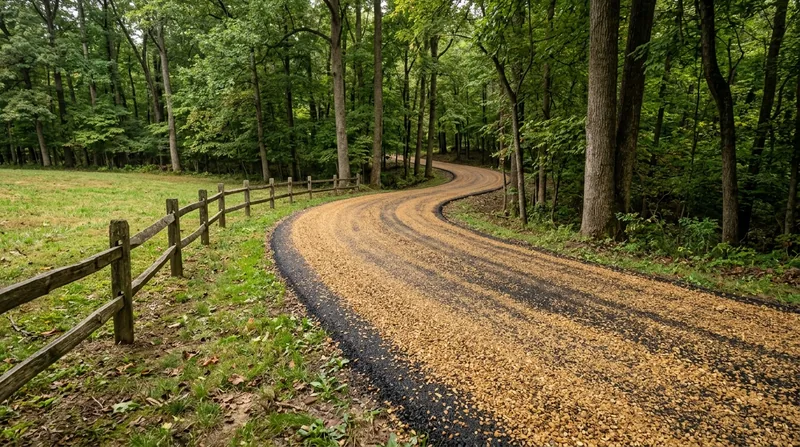




Tar and chip driveways in Dayton deliver a textured, natural-looking surface at a fraction of the cost of hot-mix asphalt, making them a smart choice for long rural drives, farm lanes, and properties where a country aesthetic fits the setting. Across the Miami Valley, from the flat glacial farmland of Darke and Preble counties to the wooded creek-side drives near Yellow Springs and Waynesville, tar and chip (also called chip seal or oil and stone) has held up well on low-traffic surfaces for decades. The liquid asphalt base with rolled stone chips gives excellent traction in snow and ice, a real asset in a region that sees dozens of freeze-thaw cycles every winter. We maintain and re-chip existing tar and chip surfaces too, extending their life without a full rebuild. If you have a long driveway, a farm lane, or want a rustic finish that suits the property, we can help you evaluate whether tar and chip makes sense for your site.
Why Tar and Chip Works Well for Dayton Rural and Country Properties
The Miami Valley's heavy glacial till clay and 40 inches of annual rainfall create challenging conditions for any drive surface. Tar and chip avoids the thick, rigid structure that hot-mix asphalt requires, making it ideal for properties where budget is tight or where the rural character of the drive matters as much as durability. It handles seasonal movement better than concrete and costs less to install than a full asphalt driveway. The textured surface naturally resists hydroplaning in rain and provides genuine traction when snow and ice appear, which matters on long farm lanes where emergency access is real.
- We apply a liquid asphalt binder over a prepared gravel base, then roll stone chips into the surface while it is still tacky.
- The finish cures over two to four weeks, during which loose chips may track onto adjacent pavement; we advise clients on timing and traffic.
- Tar and chip costs roughly 40 to 60 percent less than hot-mix asphalt for new installation, a significant savings on long rural drives.
- We re-chip existing surfaces every three to five years to refresh the binder and restore texture and traction as the original stone wears.
- The surface sheds water naturally and does not require the sloping precision that asphalt demands, making it forgiving on properties with drainage challenges.
For a long farm lane or a country driveway where the rustic finish suits the property, tar and chip offers real value and proven durability across the Miami Valley.
Local example: A three-quarter-mile farm lane in Preble County carrying daily tractor and pickup traffic has held a tar and chip surface for eight years with re-chipping every four years. The initial install cost roughly one-third of what a full asphalt rebuild would have been, and the owners maintain it as part of routine farm upkeep.
How We Install and Maintain Tar and Chip Driveways in Dayton
The process begins with a site visit to assess the existing surface, drainage, and base condition. If you are starting from scratch, we prepare a gravel base and proof-roll it to ensure proper support. If you have an existing tar and chip drive, we may simply clean and re-chip the surface, which extends life at a fraction of replacement cost. The work happens during the warm season, typically April through November, when the asphalt binder flows properly and cures evenly.
- We inspect the base and grade the drive for proper drainage, adding or compacting gravel as needed to support the new surface.
- We apply a tack coat of liquid asphalt evenly across the prepared surface, which bonds the chips and creates the finished binder layer.
- We spread and roll stone chips into the tacky asphalt while it is still workable, creating the textured top surface and embedding the aggregate.
- We allow the surface to cure for two to four weeks before heavy traffic; light vehicle traffic is usually safe within a week in dry conditions.
- We provide guidance on chip tracking and routine maintenance, including light brooming to remove loose stones and timely re-chipping when the surface begins to show wear.
For re-chipping an existing tar and chip drive in Centerville, Springboro, or the surrounding suburbs, the work is quicker and less disruptive, and the cost is much lower than a new install.
Dayton example: A long residential drive in Oakwood with mature oaks overhead was re-chipped in late May; the surface cured through June and has carried normal traffic safely since mid-summer. The owners budget for re-chipping every four years, a routine maintenance rhythm that keeps the drive safe and attractive at minimal cost.
Tar and Chip Installation Methods and Best Uses
| Approach | Description | Best for |
|---|---|---|
| New Tar and Chip Install | Full base preparation, grading, and compaction, followed by tack coat and chip application on a clean, level foundation. | Rural drives, farm lanes, long residential driveways where budget and rustic character are priorities. |
| Re-Chip Existing Surface | Clean and sweep the existing tar and chip, apply fresh tack coat, and roll new chips into the surface to restore texture and binder. | Drives that have held tar and chip for three to five years and are showing worn spots or thin binder coverage. |
| Overlay on Existing Gravel | Apply tack coat and chips directly over a gravel base that is already stable and well-drained, skipping major base work. | Gravel driveways that have settled and compacted, where adding tar and chip extends life without a full rebuild. |
| Recycled Chip and Binder Mix | Use reclaimed tar and chip material (with fresh binder added) on appropriate rural drives where cost savings justify the material source. | Budget-conscious farm and rural properties where the visual finish is less critical than durability and function. |
Tar and Chip Driveways Cost in Dayton: What to Expect
Tar and chip pricing depends on the size of the drive, the condition of the existing base, and whether you are doing a full install or a re-chip on an established surface. Starting at roughly $5 per square foot for new installation on a prepared base, a 500-square-foot rural driveway might run $2,500 to $3,500, while re-chipping an existing surface costs significantly less. A long farm lane of 2,000 square feet could range from $10,000 to $14,000 for a new install, depending on base prep and site access. Factors that affect the final number include the slope and drainage of the site, whether we are starting from bare ground or refreshing an existing surface, and how much gravel base work is needed to ensure proper support and water shedding.
We recommend getting two or three written estimates before committing, each with tonnage and thickness specs so you can compare apples to apples. The cheapest quote is not always the best value if it skips base preparation or underspecifies the binder and chip. Visit our pricing page for a detailed breakdown of what drives cost in the Dayton area and what to expect at each price point.
Tar and Chip Driveways Near Me: What Dayton Homeowners Should Know When Hiring
Hiring a contractor for tar and chip work is straightforward if you ask the right questions. Start by verifying that any contractor you call carries full liability insurance and can provide a current certificate of insurance. Ask for written estimates that specify the thickness of the binder, the tonnage of stone chips, and the timeline for curing and traffic restrictions. Check references from recent jobs in your area, particularly on similar rural or long-distance drives where tar and chip is the right choice. If your property is in an HOA community or a historic district, confirm that tar and chip is permitted under local architectural standards before you commit; some subdivisions restrict surface type or require approval before installation.
Municipal permits for driveway work vary across the Dayton area. The City of Dayton, Kettering, Beavercreek, and other municipalities may require a driveway permit if your work involves a curb cut, an apron, or changes to stormwater drainage. Call your local building department to verify what applies to your address. Ohio law requires a call to 811 before any excavation, including base prep or grading, so mark your utilities before we begin work. A reputable local contractor will walk you through these requirements and help you navigate permitting, but the responsibility for compliance rests with the property owner.
Dayton Asphalt Paving has been serving the Miami Valley since 2012, and we know the local climate, soil, and drainage challenges that affect drive longevity. We provide written estimates with tonnage specs so you can compare quotes fairly, and we are fully insured. Call us at (937) 930-3543 for a free, no-obligation estimate, or visit our contact page to request an inspection of your property.
Tar & Chip Driveways in Dayton: Pricing Guide
| Service | Price | Details |
|---|---|---|
| Tar and Chip New Install | Starting at $5/sq ft | Includes base prep, grading, liquid asphalt binder, and rolled stone chips. Cost varies with base condition and site access. |
| Re-Chip Existing Surface | Starting at $2.50/sq ft | Refresh binder and stone on an existing tar and chip drive. Significantly less than new install; extends surface life four to five years. |
| Farm Lane or Long Rural Drive | On estimate | Larger acreage and drainage complexity require site visit. Tonnage and base specs determined after inspection and measurement. |
| Permit and Utility Locate | Included | We coordinate Ohio 811 utility marking and advise on local permitting requirements; you verify with your building department. |
| Free Written Estimate | No charge | Response within 24 hours. Includes tonnage, thickness, and timeline. No obligation to book. Call (937) 930-3543. |
Indicative pricing, the exact cost depends on square footage, finish, and site access. Free personalized estimate within 24h at (937) 930-3543.


