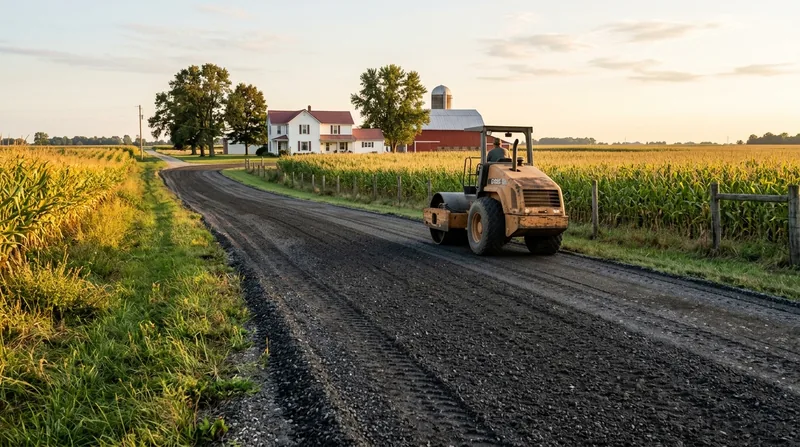




Recycled Asphalt & Millings Driveways in Dayton offer a solid, budget-smart surface for long farm lanes, parking pads, and rural properties across the Miami Valley. The glacial till clay that underlies Greater Dayton holds water after the region's 40 inches of annual rain, and the freeze-thaw cycles of a typical southwest Ohio winter can turn a gravel lane into a potholed mess within two seasons. Compacted asphalt millings bind tighter with each summer's heat, shed water better than loose gravel, and cost substantially less than hot mix asphalt while delivering years of reliable service. We grade, spread, and roll millings to proper crown and density, tell you plainly where hot mix makes sense, and help you understand the real difference between a budget surface and a long-term investment. If you're weighing asphalt driveway paving against a more economical option for a rural property or long approach, recycled millings deserve a serious look.
Why Recycled Asphalt & Millings Driveways Matter in Dayton's Rural and Long-Lane Properties
Dayton's suburban fabric is dense, but the land beyond Centerville and Springboro opens into flat glacial farmland where long gravel lanes connect machine sheds and pole barns to county roads. Xenia, Miamisburg, and the townships of Miami and Darke counties see hundreds of these drives. A traditional gravel lane requires raking and re-grading after every hard rain and winter thaw, bleeding stone dust into ditches and onto neighboring properties. Recycled asphalt millings compact and bind in place, reducing maintenance labor and dust, while still costing a fraction of full hot mix installation.
- We spread and compact millings to proper crown so water sheds off rather than pooling and washing the surface away.
- Recycled millings harden further each summer, creating a surface that handles farm traffic and seasonal weather better than loose gravel.
- Maintenance shifts from annual raking to occasional top-dressing as the material settles over years of use.
- Cost per square foot runs roughly one-third to one-half the price of new asphalt, making it ideal for quarter-mile farm lanes and large parking pads.
- Millings work well as a temporary or intermediate surface while you plan a full-depth replacement later.
For property owners facing a choice between gravel and asphalt, recycled millings close the gap and often deliver better value over a five to seven year span.
Key info: Dayton and surrounding municipalities including Kettering, Beavercreek, and Huber Heights typically do not require a permit for driveway or parking surface work on private residential property. However, if your drive crosses a county ditch, touches a culvert, or sits near a protected drainage way, the county engineer's office may require notification. Always verify with your township or village before material arrives on site.
How We Install Recycled Asphalt & Millings Driveways: The Dayton Process
A properly built millings drive starts with grading and base prep, not just dumping material. The glacial clay soil of the Miami Valley drains poorly and heaves in winter, so we establish proper slope, remove soft spots, and sometimes add a base layer of larger stone to manage subsurface water. Once the base is stable, we spread the millings in lifts, roll each layer to density, and crown the surface so water runs off instead of collecting. The result is a surface that hardens over the first two or three summers and can last five to ten years with minimal maintenance.
- We measure the drive, assess drainage and existing surface condition, and discuss your timeline and budget.
- Grading and base prep removes soft clay, establishes proper slope, and compacts the subgrade so the millings sit on stable ground.
- We deliver recycled asphalt millings to spec, spread in controlled lifts, and roll each layer to the density needed for the traffic load.
- We crown the surface to a gentle slope so water sheds to the shoulders and ditches rather than pooling in the center.
- We roll and finish, then advise you on the light traffic and settling period before you resume normal use.
The entire process typically takes one to two days for a standard residential or farm lane, depending on length and existing conditions.
Real example: A half-mile farm lane in Preble County running to a machine shed and grain storage had been regraded three times in five years. We removed the loose gravel, built a proper base, and installed compacted millings with good crown. Five years later, the owner has raked twice and added one light top-dressing. The surface still sheds water and handles a fully loaded grain wagon without rutting. That's the performance gap between gravel and millings.
Methods and Materials for Recycled Asphalt & Millings Surfaces
| Approach | Description | Best for |
|---|---|---|
| Recycled Asphalt Millings (RAP) | Reclaimed asphalt from milled-up old pavement, compacted in lifts with proper crown and roll density. | Farm lanes, long rural drives, large parking pads, budget-conscious owners planning hot mix later. |
| Crushed Asphalt Blend | Recycled millings mixed with fresh asphalt cement and binder to accelerate bonding and durability. | Drives needing faster hardening or slightly higher performance than plain millings. |
| Gravel with Dust Control Additive | Traditional gravel with a polymer or tackifier to reduce dust and improve binding without asphalt. | Temporary or transitional surfaces, cost-sensitive rural properties, environmentally sensitive sites. |
| Base Prep and Grading Only | Professional grading, crown, and compaction of existing gravel or subgrade to improve drainage and reduce maintenance. | Owners who want to keep their existing material but improve the structure and slope. |
Recycled Asphalt & Millings Driveways Cost in Dayton: What to Expect
Recycled asphalt millings typically run starting at $3 per square foot for material and installation, though the real cost depends on several concrete factors. A quarter-mile farm lane with good existing base and simple grading may land at the lower end, while a long approach with poor drainage, soft clay, and a need for substantial base work will run higher. The length of the drive, the condition of the subgrade, water management on the property, and the compaction standard all affect the final number. A 200-foot rural driveway might run $1,500 to $2,500; a half-mile farm lane could range from $4,000 to $8,000 depending on base work. For a precise quote, we measure on site, assess drainage and soil condition, and provide a written estimate with tonnage and material specs.
Getting two or three estimates from local paving contractors gives you a clear picture of the market and helps you spot red flags, like prices that seem too good or contractors unwilling to discuss base preparation. We provide a free estimate within 24 hours and can walk you through the real cost drivers so you understand where your money goes. For detailed pricing on other services and a fuller sense of the range, visit our pricing overview.
Recycled Asphalt & Millings Driveways Near Me: What to Look for When Hiring a Contractor in Dayton
The paving trade has a long history of itinerant crews offering "leftover asphalt" from a job down the road, demanding a large cash deposit, and disappearing before the work hardens. The strongest defense is working with a verifiably local contractor with a local address, local equipment, and a reputation built on repeat work and referrals in Dayton and the surrounding towns. Before you hire anyone, verify their insurance certificate, ask for references from recent jobs in your area, and request a written estimate that includes material type, tonnage, thickness, and the scope of base preparation.
- Confirm the contractor is fully insured and ask to see the certificate before work begins.
- Request at least two references from jobs completed in the last 18 months within Dayton or the surrounding suburbs.
- Verify the estimate includes tonnage, material type (recycled asphalt, crushed blend, etc.), compaction specs, and the cost of base prep separately from material and labor.
- If your drive is in an HOA community or a historic district, ask the contractor to clarify what approvals or permits may be required and defer to your local building department.
- Never pay more than 25 percent down before work starts, and hold the final payment until the job is complete and the surface has settled.
Once you've chosen a contractor, call us at (937) 930-3543 to schedule a free estimate and we'll walk you through the process step by step.
Recycled Asphalt & Millings Driveways in Dayton: Pricing Guide
| Service | Price | Details |
|---|---|---|
| Recycled Asphalt Millings Installation | Starting at $3/sq ft | Material and labor for spreading and compacting recycled asphalt millings with proper crown and drainage slope. |
| Base Preparation and Grading | Starting at $1,500 | Subgrade assessment, removal of soft clay, compaction, and crown establishment to ensure proper drainage and durability. |
| Long Farm Lanes or Large Parking Areas | On estimate | Complex jobs with significant base work, extended length, or challenging drainage require on-site assessment before pricing. |
| Travel and Mobilization | Included | No separate mileage or call-out fee for work in Dayton and surrounding service areas within the Miami Valley region. |
| Free Written Estimate | Free | Detailed proposal with tonnage, material type, and base-prep scope. Response within 24 hours at (937) 930-3543. |
Indicative pricing, the exact cost depends on square footage, finish, and site access. Free personalized estimate within 24h at (937) 930-3543.


