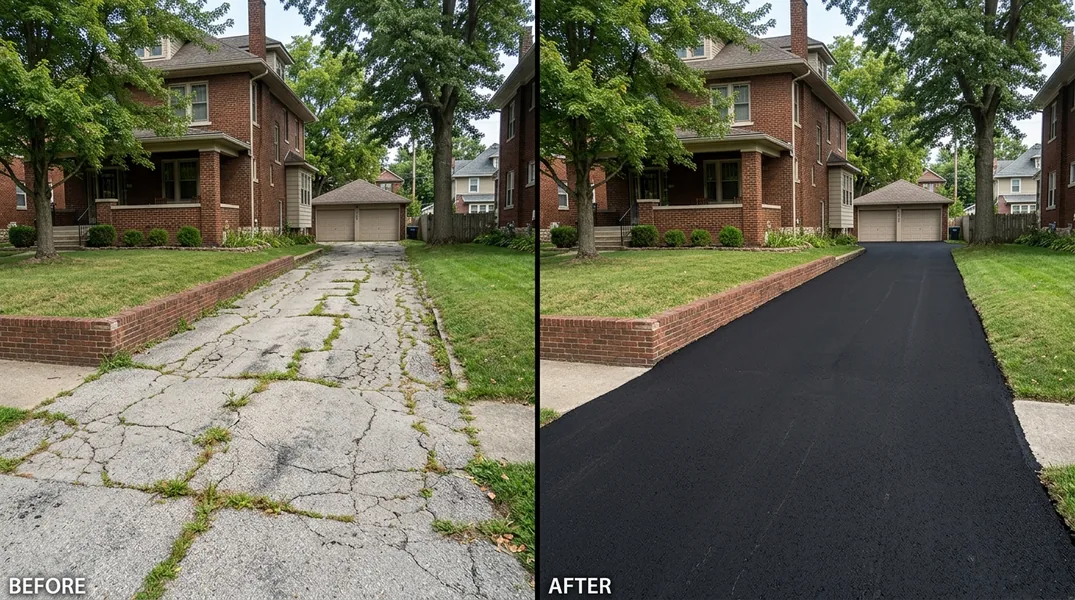
Asphalt vs Concrete Driveway: The Ohio Winter Challenge
When you're a homeowner in Dayton, choosing between an asphalt and concrete driveway isn't just about aesthetics. Ohio winters are notoriously harsh, with freeze-thaw cycles that can wreak havoc on any surface. Understanding how each material responds to our local climate is essential before making a significant investment in your property.
Both asphalt and concrete have their strengths and weaknesses when it comes to surviving Dayton's winters. The question isn't which one is universally better, but rather which one makes the most sense for your specific situation, budget, and long-term maintenance preferences. Let's break down the science behind how these materials handle cold, moisture, and salt.
How Freeze-Thaw Cycles Affect Asphalt and Concrete
Freeze-thaw cycles are the primary culprit behind winter driveway damage in Ohio. When water seeps into cracks and freezes, it expands. This expansion creates pressure that widens cracks and eventually breaks apart the surface. Both asphalt and concrete are vulnerable, but they fail in different ways.
Concrete is a rigid, brittle material. When water penetrates and freezes, the ice formation forces the concrete to crack, often in a linear pattern. These cracks spread quickly because concrete doesn't have the flexibility to accommodate the pressure. Once concrete cracks, water gets deeper into the base layers, accelerating deterioration. Salt used on roads and driveways also accelerates concrete's breakdown by attacking the surface and internal structure.
Asphalt, being more flexible and porous, handles freeze-thaw stress differently. Its flexibility allows it to move slightly as the ground beneath shifts and expands. However, asphalt's porous nature means water can penetrate more easily. This is why regular maintenance and seal coating are critical for protecting an asphalt driveway through Ohio winters. With proper care, asphalt can actually outperform concrete in our climate.
Asphalt Driveway Lifespan in Ohio's Climate
An Asphalt Driveway Paving & Installation typically lasts 15 to 20 years under normal conditions. In Dayton, where winters are severe, you can expect the lifespan to fall toward the lower end of that range if not properly maintained. However, with proactive care, many asphalt driveways in our region reach 18 to 20 years or even longer.
The key to extending your asphalt driveway's life is preventative maintenance. Seal coating every two to three years protects the surface from water penetration and UV damage. Filling small cracks before winter prevents them from becoming major problems. Removing standing water and keeping your driveway clear of debris also helps. Many homeowners in Dayton who invest in these maintenance steps find their asphalt driveways remain in good condition well into their second decade.
When damage does occur, Driveway Repair and Pothole Repair & Asphalt Patching are usually affordable and effective solutions. If your asphalt driveway develops more extensive wear, Asphalt Resurfacing & Overlay can extend its life by another 10 to 15 years without the cost of complete replacement.
Concrete Driveways: Durability and Winter Challenges
Concrete driveways can last 25 to 30 years in ideal conditions, which might make them seem like the better choice. However, Ohio winters are far from ideal for concrete. The freeze-thaw cycle is particularly damaging, and salt accelerates surface spalling (flaking) and internal deterioration. Many concrete driveways in our region show significant damage within 10 to 15 years.
Concrete's rigidity, which seems like a strength, actually works against it in freeze-thaw environments. The material cannot flex or accommodate the stress of expanding ice. This leads to cracking, and once concrete cracks, repair options are limited. Patching concrete cracks is cosmetic at best and doesn't prevent water from continuing to penetrate the base. Full-depth repairs are expensive and often don't blend well with the surrounding surface.
Another issue specific to Ohio winters is salt damage. While salt is necessary for safety, it chemically breaks down concrete over time. Concrete also absorbs water more readily than sealed asphalt, making it more susceptible to freeze-thaw damage. If you choose concrete in Dayton, you'll need to apply sealers regularly and avoid using rock salt (calcium chloride is gentler). Even with these precautions, concrete typically requires more expensive repairs sooner than asphalt.
Cost Comparison: Installation and Long-Term Maintenance
When evaluating pricing for asphalt versus concrete, you need to consider both initial installation and ongoing maintenance costs. Asphalt typically costs less upfront, roughly 30 to 40 percent less than concrete per square foot. This lower initial investment is attractive to many homeowners, but the real difference emerges over time.
Concrete has higher upfront costs but requires less frequent maintenance in ideal climates. In Ohio, however, the advantage diminishes significantly. Concrete driveway repairs are expensive, especially when you need to address cracking or spalling. Replacing a damaged section of concrete costs nearly as much as installing new asphalt. Asphalt's lower maintenance costs (seal coating and minor patching) often result in lower total cost of ownership over 20 years, even accounting for more frequent attention.
If you're considering converting an existing concrete driveway to asphalt, an asphalt over concrete driveway installation is a cost-effective option. This approach avoids the expense of concrete removal and provides a fresh, durable surface. For a detailed breakdown of costs specific to your project, Dayton Asphalt Paving is happy to provide a free estimate.
Which Material Is Right for Your Dayton Home?
The best choice between asphalt and concrete depends on your priorities. If you value lower upfront costs, easier repairs, and better performance in freeze-thaw climates, asphalt is the clear winner for Ohio homeowners. If you prefer a surface that requires less frequent maintenance and don't mind higher repair costs when problems arise, concrete might appeal to you, though it's less practical in our region.
Many experts recommend asphalt for Dayton and surrounding areas specifically because our winters are so demanding. Asphalt's flexibility and lower maintenance costs make it the more practical choice for Ohio's climate. If you already have a concrete driveway, an Asphalt Driveway Paving & Installation overlay can provide the benefits of asphalt without the cost of removal.
Ready to make a decision? The team at Dayton Asphalt Paving can assess your current driveway and recommend the best solution for your home. Call (937) 930-3543 today or request a free estimate to discuss your driveway needs. We serve homeowners throughout Dayton and are committed to helping you choose the durable, cost-effective solution that will stand up to Ohio winters for years to come.
Looking for a professional asphalt paving contractor in Dayton? Dayton Asphalt Paving responds fast for all your asphalt paving needs.
Get a Free Quote