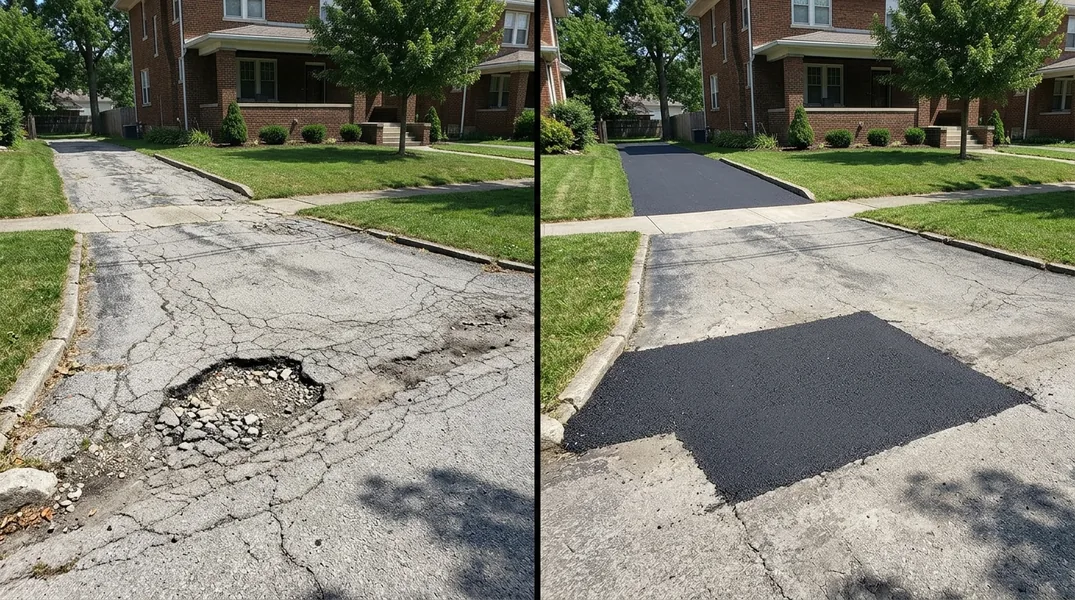
How Ohio Winters Create Potholes and Driveway Damage
Winter in Dayton is tough on asphalt. The freeze-thaw cycle that defines an Ohio winter is one of the most damaging forces your driveway will face. When moisture seeps into small cracks in your asphalt, it expands as it freezes, pushing the pavement upward and outward. When temperatures rise above freezing, that ice melts and leaves behind voids beneath the surface. This repeated expansion and contraction weakens the structural integrity of your driveway, eventually causing the asphalt to crack, heave, and break apart into the potholes you see come spring.
Frost heave is particularly common in the Dayton area, where winter temperatures regularly dip below freezing for extended periods. The problem is compounded if your driveway doesn't have proper drainage or if the base layer beneath the asphalt has shifted over time. Even a well-maintained driveway can develop potholes after a harsh winter, and ignoring them only makes the problem worse. Water continues to infiltrate the damaged areas, spreading damage to surrounding asphalt and weakening the foundation beneath.
Pothole Repair & Asphalt Patching Near Me: When Patching Makes Sense
Pothole Repair & Asphalt Patching is a quick, cost-effective solution for isolated damage. If your driveway is relatively young (less than 10 years old), structurally sound in most areas, and has only a few potholes or localized damage, patching is often the right choice. A professional patch fills the damaged area with new asphalt, sealing out water and restoring a smooth surface. This approach works well when damage is limited to specific spots rather than spread across the entire driveway.
The key to successful patching is proper preparation and the right materials. A quality patch involves cleaning out debris and loose asphalt, priming the damaged area, and filling it with hot-mix asphalt that's compacted firmly. When done correctly by experienced professionals, a patch can last several years. However, patches are not a permanent solution if the underlying cause (poor drainage, weak base, or continued freeze-thaw damage) isn't addressed. If you're seeing new potholes appear year after year in the same general area, it's a sign that patching alone won't solve your problem long-term.
When Repaving or Resurfacing Is the Better Option
If your driveway shows widespread damage, multiple potholes across different areas, or extensive cracking, Asphalt Resurfacing & Overlay or full repaving is typically the smarter investment. Resurfacing involves applying a new layer of asphalt over the existing surface, which is less invasive and less expensive than complete removal and replacement. This option works well if the base layer is still solid but the top layer has deteriorated. Full repaving, on the other hand, removes the old asphalt entirely and lays down new material from the ground up. This is necessary when the base has failed, when the driveway is severely compromised, or when you want to ensure maximum longevity.
Resurfacing typically lasts 15 to 20 years with proper maintenance, while a full repave can last 20 to 30 years or more. If your driveway is more than 15 years old, showing signs of alligatoring (a pattern of interconnected cracks), or experiencing multiple problem areas, repaving is often the more economical choice in the long run. Yes, the upfront cost is higher, but you avoid the frustration and expense of repeated patching over the next few years. A professional assessment from Dayton Asphalt Paving can help you determine which option makes the most sense for your specific situation.
Assessing Your Driveway: Key Questions to Ask
Before deciding between patching and repaving, ask yourself a few critical questions. How old is your driveway? If it's less than 10 years old with only minor damage, patching is likely sufficient. How extensive is the damage? Count the number of potholes and assess how much of the driveway surface is affected. Are the problems isolated to one area, or scattered throughout? Is the driveway sinking or heaving in places, suggesting base layer failure? Do you have standing water or poor drainage around the edges? These factors all influence whether a patch will hold or whether you need a more comprehensive solution.
Another important consideration is your long-term plans. If you're planning to sell your home in the next few years, a full Asphalt Driveway Paving & Installation or resurfacing project can significantly boost curb appeal and property value. Buyers are often wary of driveways with visible damage, and a fresh, smooth surface tells them you've maintained the property well. If you're staying long-term, investing in a repave now saves you money and headaches compared to years of patching.
Asphalt Driveway Paving & Installation Cost in Dayton: What to Budget
The cost difference between patching and repaving varies significantly based on the extent of damage and the size of your driveway. A single pothole patch typically costs between $100 and $300, making it an attractive short-term fix. However, if you need multiple patches or patching across a large area, costs can add up quickly. Asphalt Resurfacing & Overlay generally runs $1.50 to $3.00 per square foot, while a full repave can range from $3.00 to $5.00 per square foot or more, depending on site conditions and base preparation. For a typical 500-square-foot driveway, resurfacing might cost $750 to $1,500, while a full repave could run $1,500 to $2,500 or more.
These are estimates, and your actual pricing will depend on factors like the current condition of your driveway, site accessibility, drainage improvements needed, and local market conditions in Dayton. The best way to understand your options and costs is to request a free estimate from Dayton Asphalt Paving. Our team will inspect your driveway, identify the root cause of the damage, and provide you with clear recommendations and transparent pricing for both patching and repaving solutions.
Preventing Future Damage: Maintenance Tips for Dayton Homeowners
Whether you choose patching or repaving, preventing future damage is just as important as fixing current problems. Regular maintenance extends the life of your asphalt significantly. Seal coating your driveway every two to three years protects the surface from UV rays, water penetration, and oxidation. Filling small cracks before they become large ones stops water from seeping beneath the surface and causing frost heave damage. Keeping your driveway clean and ensuring proper drainage around the edges prevents standing water from weakening the base layer.
During winter, avoid using rock salt or harsh chemicals that can accelerate asphalt degradation. Instead, use sand or kitty litter for traction. Clear snow and ice promptly to reduce the weight burden on your driveway and minimize the freeze-thaw cycle's impact. If you notice new cracks or small potholes forming, address them immediately rather than waiting for them to grow. These simple steps, combined with professional Driveway Repair when needed, will help you avoid major problems down the road. For expert guidance on maintaining your driveway through Ohio winters, call Dayton Asphalt Paving at (937) 930-3543 today.
Looking for a professional asphalt paving contractor in Dayton? Dayton Asphalt Paving responds fast for all your asphalt paving needs.
Get a Free Quote